Fields and Gear in Amateur Soccer: Dimensions, Surfaces, Cleats
A soccer field is more than a rectangle with goals. Its dimensions and properties affect how a game flows and how safe it is for the players. Field size, surface and the right shoes decide whether a game is pleasant or marked by slips and falls. What does a field that follows the rules look like, and how do the surfaces differ? The article below sums up the basics for recreational and club players.
Field Dimensions: What Do the Rules Say?
Under the laws of the game, a field is between 90 and 120 meters long and between 45 and 90 meters wide. The range is wide, so two fields that both follow the rules can feel very different. One may leave more room for fast wingers, while the other is more cramped.
The dimensions of the goal area and the penalty area, by contrast, are set precisely. The goal is 7.32 meters wide and 2.44 meters high. The penalty area extends 16 meters from the goal line into the field, and the penalty spot lies 11 meters from the goal. These figures help you judge whether a field is marked correctly. Field dimensions are therefore partly flexible and partly fixed exactly.
The Playing Surface
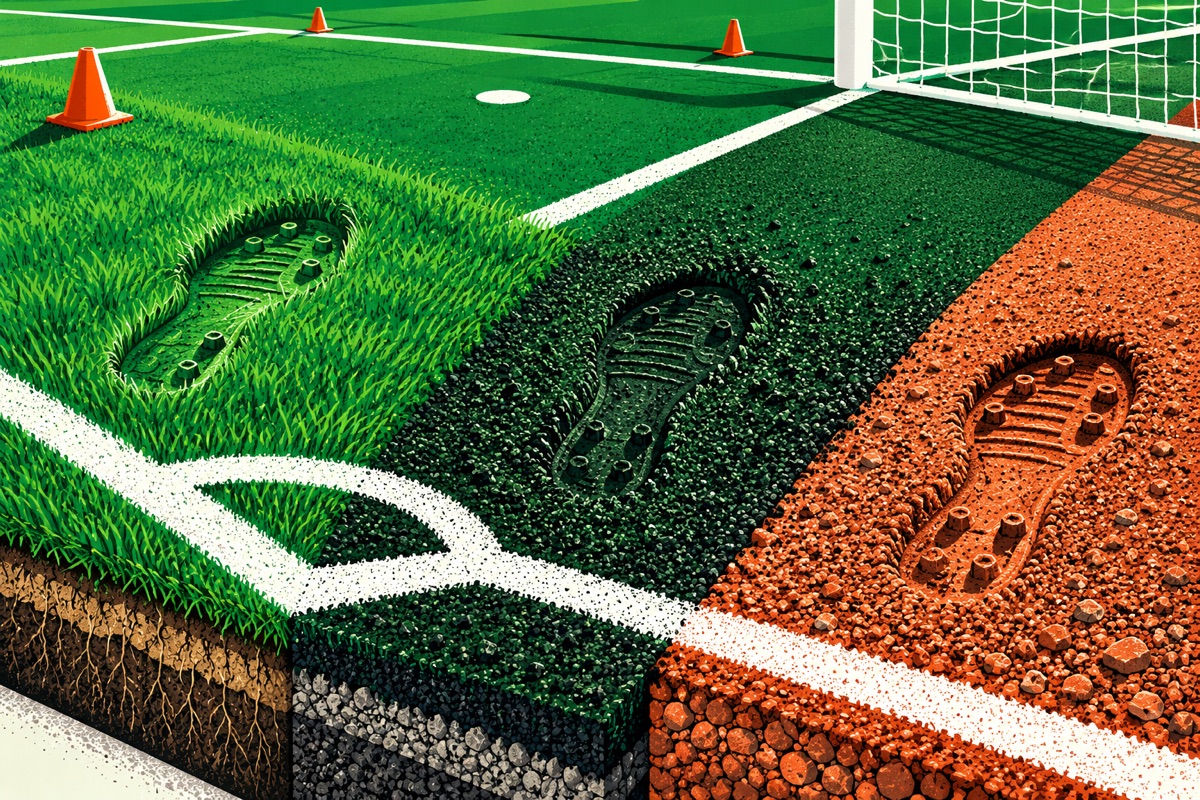
There are three basic kinds of surface: natural grass, artificial turf, and hard fields made of gravel or similar material. Each surface needs different care. The differences affect both the upkeep required and how comfortable the game feels.
Artificial turf is often chosen where a field gets heavy use. With artificial turf fields, microplastics are an issue. The EU has adopted a ban on intentionally added microplastics. Long transition periods are planned for sports fields. The exact deadlines and requirements should be looked up in the current regulations before anyone decides to renovate or replace a surface.
Natural grass needs different care than artificial turf, and a hard field has properties of its own. Each surface feels different underfoot. That is why the surface and the shoes should be matched to each other. Choosing the shoes matters just as much as choosing the surface.
Soccer Cleats: Which Shoe for Which Ground?
A good shoe has to suit the surface, because the wrong studs raise the risk of slipping. Soccer cleats therefore carry codes that show which ground they are recommended for. FG stands for firm natural grass, SG for soft ground, AG for artificial turf, TF for harder surfaces and IN for indoor.
This simple system makes choosing easier even without detailed knowledge of how a shoe is built. It is enough to look for the code that matches the ground you mostly play on. If you train on several surfaces, remember that a single pair will not give the same grip everywhere. In that case, it helps to base your choice on the surface you play on most often.
Shin Guards and Conclusion
Shin guards, which are mandatory in matches, are part of the basic kit as well. Nobody should step onto the field without them, whatever the division. Neither good technique nor experience can replace them.
Field dimensions, surface, cleats and shin guards together determine the quality of the game. If you know these basics, you can judge any field better and prepare for a match without needless risk.