The League System in German Soccer: From the Bundesliga to the District League
The league system in German soccer is shaped like a pyramid in which every level connects to the next through promotion and relegation. The Bundesliga sits at the top, and the district divisions, where amateurs compete, sit at the bottom. How is this system built, and who is responsible for the individual levels? The overview below explains the whole structure.
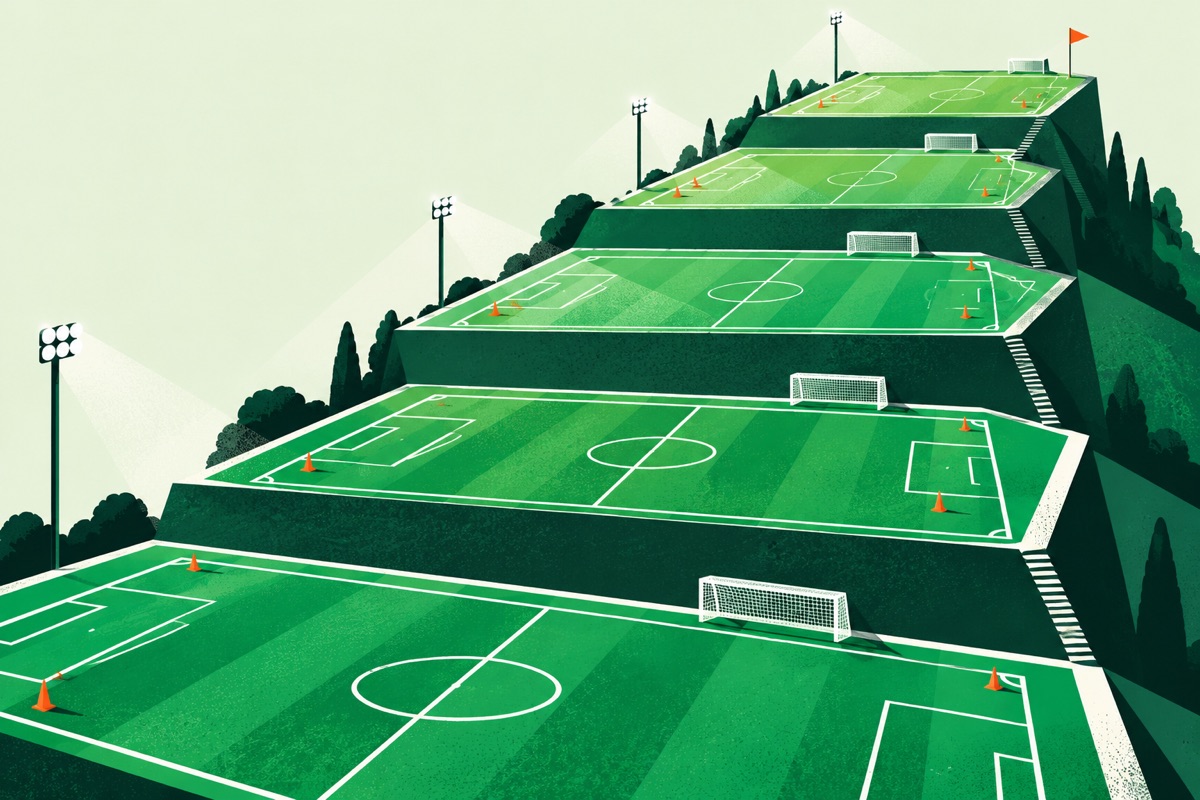
How Is the League System Built?
The top division is the Bundesliga. Below it come the 2. Bundesliga and the 3. Liga. These levels make up the upper part of the pyramid.
Below that the system widens. The 3. Liga is followed by the Regionalliga, which is split into five regional groups. Next comes the Oberliga, and below it are the leagues of the state associations, for example the Landesliga, the Bezirksliga and the district divisions. The names of the lower leagues differ by state association, so the same level can have a different name in different parts of the country.
The lower a league sits, the more local the competition. From the Regionalliga downward the structure is more fine-grained than at the top.
Who Runs the Leagues?
The German Football Association (DFB) is divided into five regional associations and 21 state associations. The state associations run play in the lower leagues and set the details for their region.
This split holds the structure together across the whole country and at the same time lets competition be adapted to local conditions.
Promotion and Relegation: How Does Movement Between Levels Work?
Promotion and relegation link all levels of the pyramid. The best teams of a season move up to the next division, and the weakest move down. Details such as the number of promotion places or the rules for playoff matches are set by each association.
In principle, a team from a district division therefore has a path upward open to it. Conversely, teams in higher leagues have to expect that they could lose their place.
Amateur Leagues: The Largest Part of the Pyramid
The district divisions form the lowest level. Teams there are mostly made up of amateur players with no professional contracts. The DFB has more than seven million members, and most teams play in amateur leagues. The amateur leagues are therefore the foundation of the whole structure, while professional soccer is only its narrow tip.
Anyone who knows this layout understands the league system better: from the Bundesliga through the Regionalliga and the Oberliga to the district divisions of the state associations.