Youth Soccer in a Club: Age Groups and Game Formats
Youth soccer in a club is divided into age groups that give structure to training and competition. The grouping decides which field and which team size children play on. What does the structure look like, and why don't the youngest play eleven against eleven? This article explains the grouping and the main game formats, using the German system as the example.
What Are Age Groups in Youth Soccer?
Age groups are the categories a club uses to place its players by age. Germany has seven of them: G juniors (up to under 7), F juniors (under 9), E juniors (under 11), D juniors (under 13), C juniors (under 15), B juniors (under 17) and A juniors (under 19). The U stands for the upper age limit of the group, and the letter marks the level, from G for the youngest to A for the oldest. The system is easy to grasp, because the letter alone tells you what stage of development a team is at.
What counts is the birth year, not the exact date of birth. A whole year group plays on the same team, no matter which month the children reach the age in question. That is simple to organize, and parents who want to know where their child plays can follow it easily. Knowing the birth year is enough to find the right age group.
Game Formats in Youth Soccer
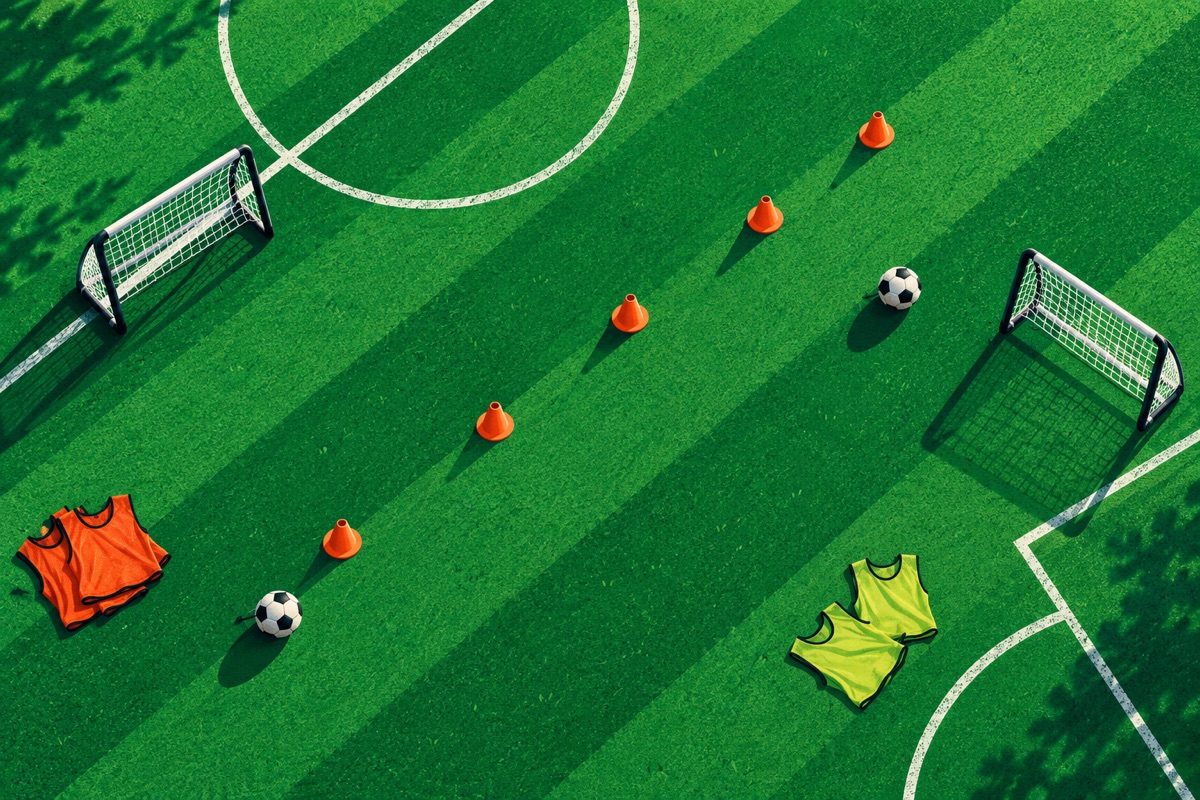
The youngest play in small teams on a smaller field, with fewer than eleven players per side. This is a deliberate choice: on a big field with full teams, a child touches the ball less often. In a small format such as three against three or four against four, every child gets more touches and makes more decisions. That way everyone gets to play, not just a few especially active kids.
That is why the DFB increasingly relies on small-sided games and play festivals for the youngest instead of classic tournaments with a table. At a play festival, many short games are played. The emphasis shifts from the result to the game itself. The older age groups move step by step toward the regular game, and the principle of adapting the rules to what the players can do still holds. In this way youth soccer can grow with the child without skipping stages of development.
Training Children: What Matters?
In training with children, the focus is on enjoying the game, coordination and the basics of technique. It is not about specializing in one position, because at this age children should try out different roles. That builds general agility and gets them comfortable with the ball before more specific tasks are added. Training is thus more an introduction to the game than preparation for a fixed position.
For a youth team a club generally needs a coach, someone to look after the team and parents who help with driving. Without that support, even well-planned training can hardly lead to regular games and away trips. Parents who want to sign up their child should therefore know that their own effort also helps team life to work. It is worth thinking about this before the first practice.
How to Read the Structure
If you know the age groups and game formats, you understand better what happens on the field and why children of different ages play by different rules. Youth soccer starts with small teams and short games and leads over time to the regular game. That sequence gives parents an idea of what to expect from their child's next stages. To find out how the grouping looks in your own club, ask the coach or the team manager for the age group in question.